Falkome AI
Generative AI

From foundation models to production-grade agents.

We design, fine-tune, and deploy generative systems for the enterprise — from synthetic vision data and document intelligence to retrieval-augmented assistants that ground answers in your private knowledge. Our team brings deep experience in transformer architectures, vision-language models, and the safety, evaluation, and observability that make generative systems reliable at scale.

Core capabilities

Production-grade generative ai solutions

Each capability is engineered as a deployable module — with the data pipeline, model, edge runtime, and observability you need on day one.

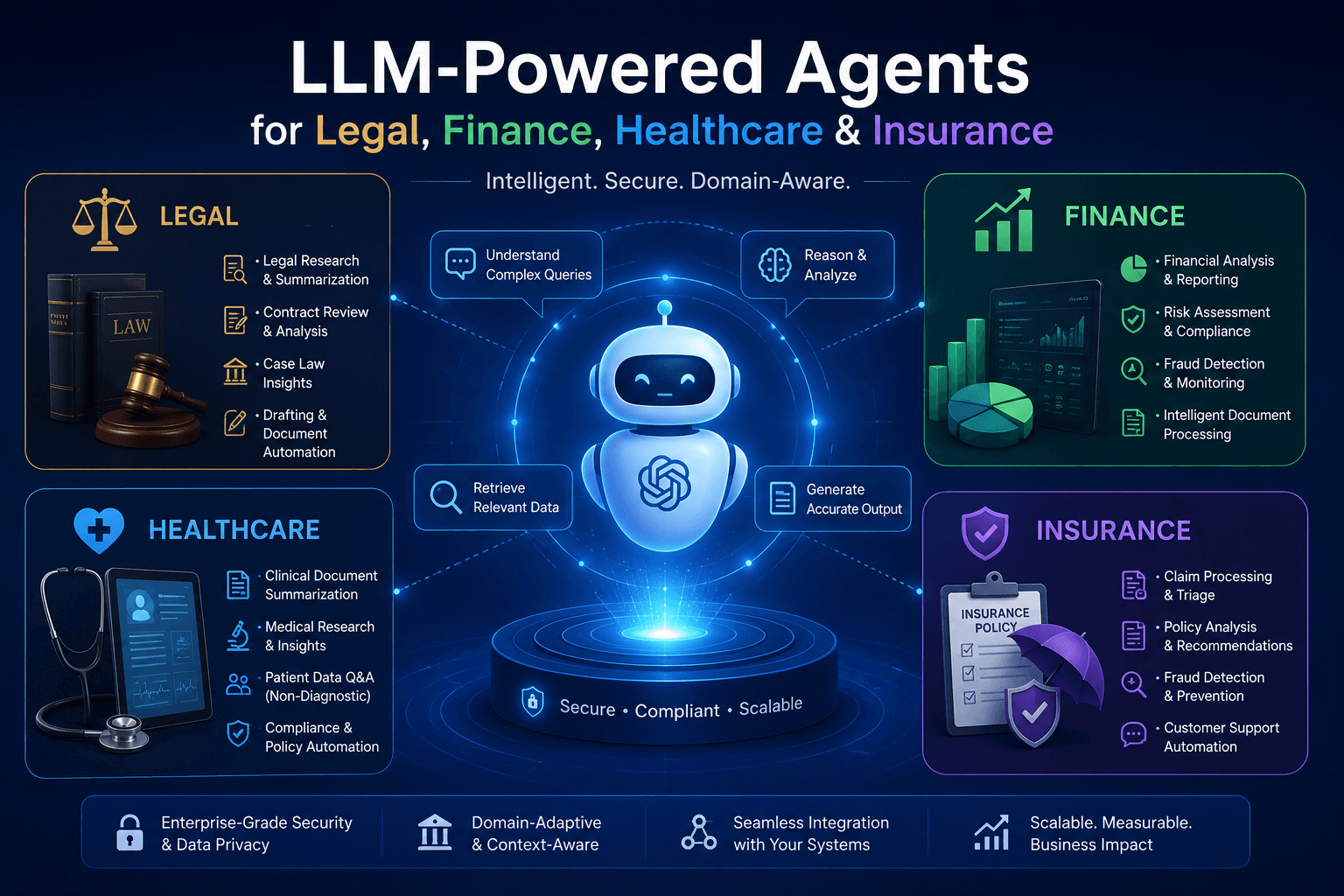
LLM-Powered Agents for Legal, Finance, Healthcare & Insurance
Capability 01

LLM-Powered Agents for Legal, Finance, Healthcare & Insurance

The challenge

Professionals and consumers face the same challenge across industries — dense, jargon-filled documents that are impossible to understand without expensive experts.

Our AI solution

An LLM agent reads, understands, and explains documents in seconds. Users upload a document or ask a question in plain language — the agent delivers clear, structured answers.

How it works:
  • User uploads document or asks a question
  • OCR extracts text from scans/PDFs
  • RAG retrieves the most relevant sections
  • Central LLM reasons over the content and generates a structured response
  • Output delivered as summary, checklist, appeal guide, or report
Agent Workflows(Legal) — Case Studies 1
Capability 02

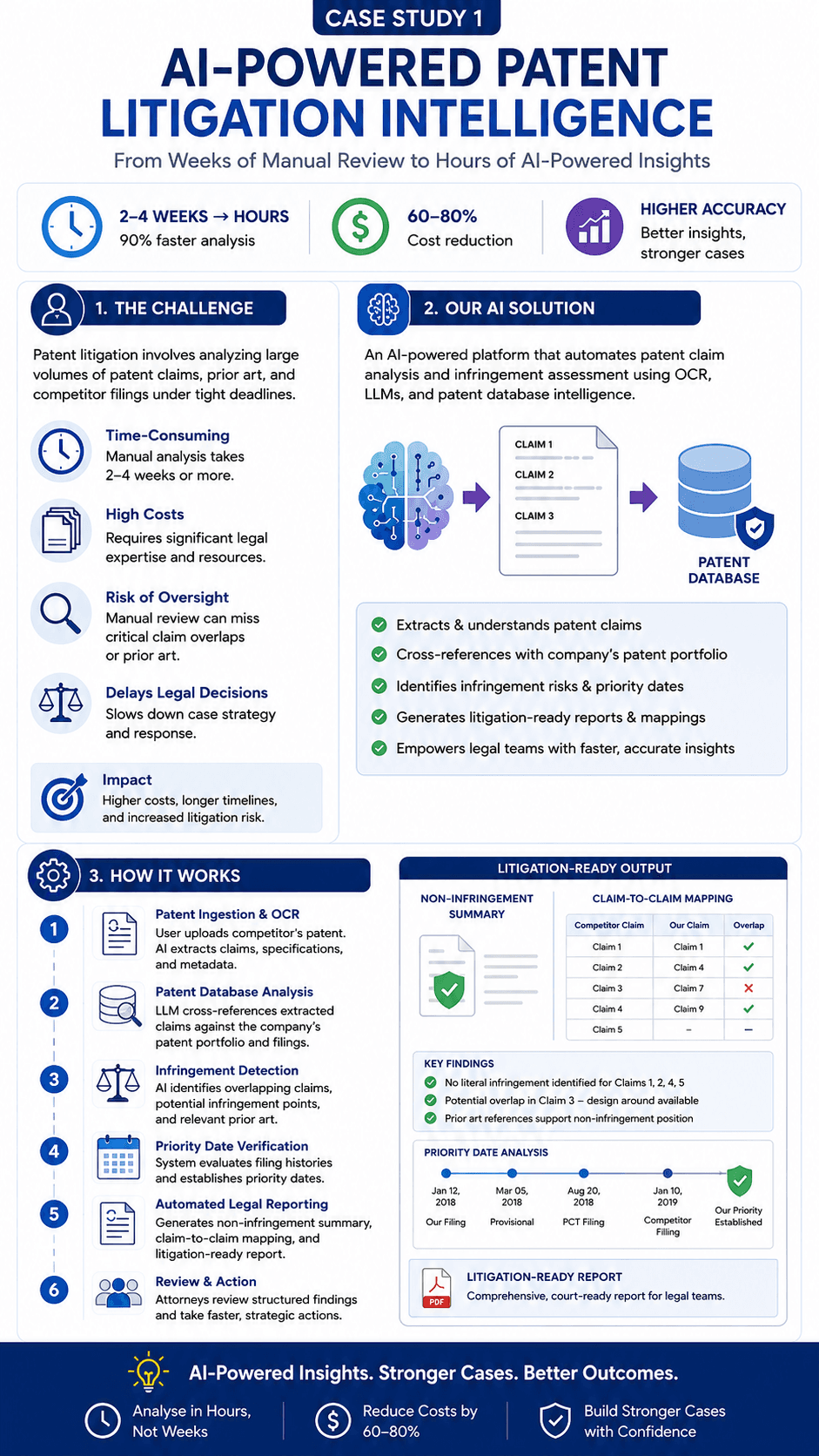
Agent Workflows(Legal) — Case Studies 1

The challenge

Organizations facing patent litigation often need to review large volumes of patent claims, prior art, and competitor filings within tight deadlines. Manual analysis requires significant legal expertise, is time-consuming, and can take weeks to identify potential infringement risks, establish priority dates, and prepare litigation-ready documentation. The process is costly, prone to oversight, and delays critical legal decisions.

Our AI solution

We developed an AI-powered Patent Litigation Intelligence platform that automates patent claim analysis and infringement assessment. By combining OCR, Large Language Models (LLMs), and patent database intelligence, the solution rapidly extracts patent claims, compares them against existing patent portfolios, identifies potential infringement points, and generates detailed legal summaries. The platform empowers legal teams with faster, more accurate insights while significantly reducing review costs.

How it works:
  • Patent Ingestion & OCR: User uploads a competitor's patent document, and AI extracts claims, specifications, and metadata using advanced OCR.
  • Patent Database Analysis: The LLM cross-references extracted claims against the company's patent portfolio and historical filings.
  • Infringement Detection: AI identifies overlapping claims, potential infringement risks, and relevant prior art references.
  • Priority Date Verification: The system evaluates filing histories and establishes priority dates to strengthen legal positioning.
  • Automated Legal Reporting: Generates a non-infringement summary, claim-to-claim mapping, and a litigation-ready report for legal teams.
  • Review & Action: Attorneys receive structured findings, enabling faster case assessment and strategic decision-making.
Agent Workflows(Finance) — Case Studies 2
Capability 03

Agent Workflows(Finance) — Case Studies 2

The challenge

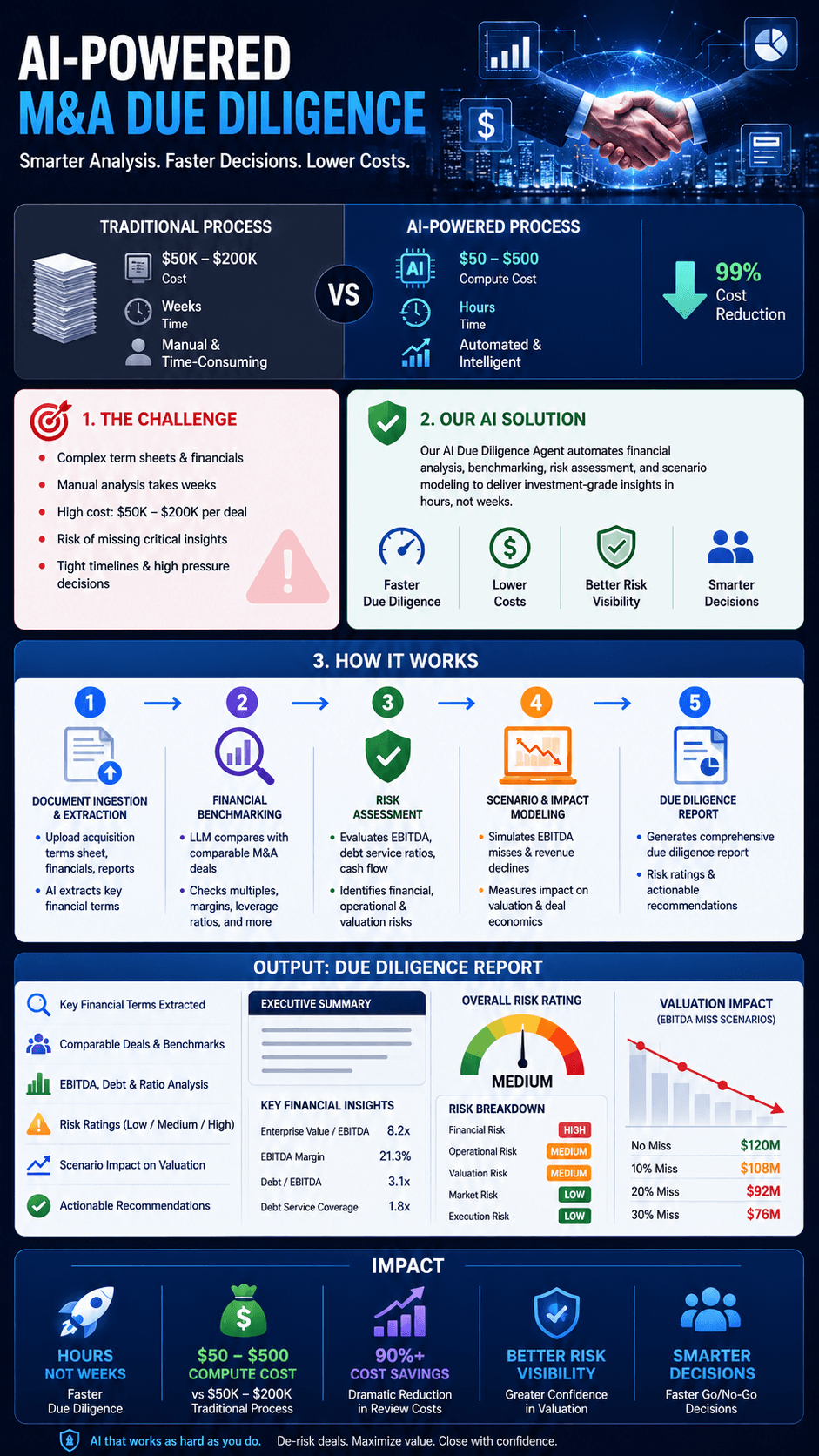
Mergers and acquisitions require extensive due diligence across financial, operational, and strategic dimensions. Traditional review processes involve weeks of manual analysis by investment bankers, consultants, and legal teams, resulting in high costs and delayed decision-making.

Our AI solution

Our AI-powered M&A Due Diligence Agent automates financial analysis, benchmarking, and risk assessment throughout the acquisition process.The platform intelligently reviews acquisition term sheets, compares target company metrics against industry benchmarks, evaluates financial risks, and generates investment-grade due diligence reports within hours instead of weeks.

How it works:
  • Step 1: Document Ingestion & Extraction: User uploads acquisition term sheets, financial statements, and supporting documents. AI extracts key deal terms, valuation assumptions, debt structures, and financial metrics
  • Step 2: Financial Benchmarking: LLM compares transaction metrics against historical M&A deals and industry benchmarks, Evaluates valuation multiples, EBITDA margins, leverage ratios, and market comparables.
  • Step 3: Risk Assessment: Identifies financial, operational, and valuation risks, Reviews debt service coverage ratios, cash flow sustainability, and earnings quality, Flags areas requiring deeper investigation.
  • Step 4: Scenario & Impact Modeling: Simulates performance shortfalls and downside scenarios, Measures how EBITDA misses or revenue declines affect enterprise value and deal economics, Quantifies potential exposure for acquirers and investors
  • Step 5: Automated Due Diligence Report: Generates comprehensive due diligence reports, Assigns risk ratings across key financial categories, Provides actionable recommendations for the M&A team.
Agent Workflows(Healthcare) — Case Studies 3
Capability 04

Agent Workflows(Healthcare) — Case Studies 3

The challenge

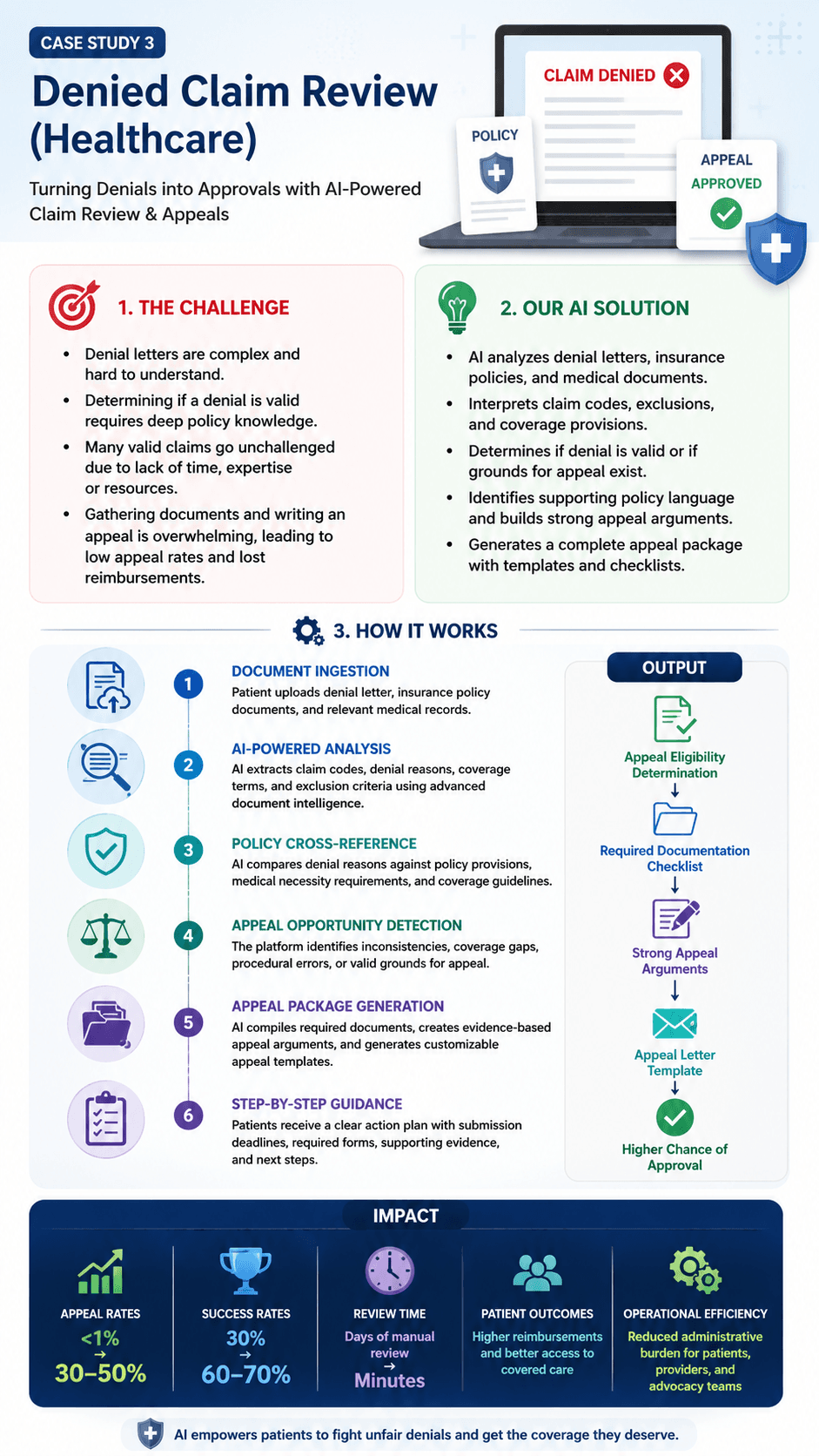
Patients often receive claim denial letters filled with complex medical codes, policy language, and legal terminology that are difficult to understand, Determining whether a denial is justified requires reviewing lengthy insurance policies, exclusion clauses, and claim histories, Many valid claims go unchallenged because patients lack the expertise, time, or resources to identify appeal opportunities, Gathering supporting documents and preparing a compliant appeal can be overwhelming, resulting in low appeal rates and missed reimbursements.

Our AI solution

An AI-powered claim review assistant that analyzes denial letters, insurance policies, and supporting medical documentation, Automatically interprets claim codes, policy exclusions, and coverage provisions to determine whether the denial is valid, Identifies potential grounds for appeal and highlights policy language that supports the patient's case, Generates a comprehensive appeal package, including required documentation checklists, evidence summaries, and professionally drafted appeal language.

How it works:
  • Document Ingestion: Patient uploads the denial letter, insurance policy documents, and any relevant medical records.
  • AI-Powered Analysis: The system extracts claim codes, denial reasons, coverage terms, and exclusion criteria using advanced document intelligence.
  • Policy Cross-Reference:AI compares denial reasons against policy provisions, medical necessity requirements, and coverage guidelines.
  • Appeal Opportunity Detection: The platform identifies inconsistencies, coverage gaps, procedural errors, or valid grounds for appeal.
  • Appeal Package Generation: AI compiles required supporting documents, creates evidence-based appeal arguments, and generates customizable appeal templates.
  • Step-by-Step Guidance: Patients receive a clear action plan outlining submission deadlines, required forms, supporting evidence, and next steps.
Agent Workflows (Insurance) — Case Studies 4
Capability 05

Agent Workflows (Insurance) — Case Studies 4

The challenge

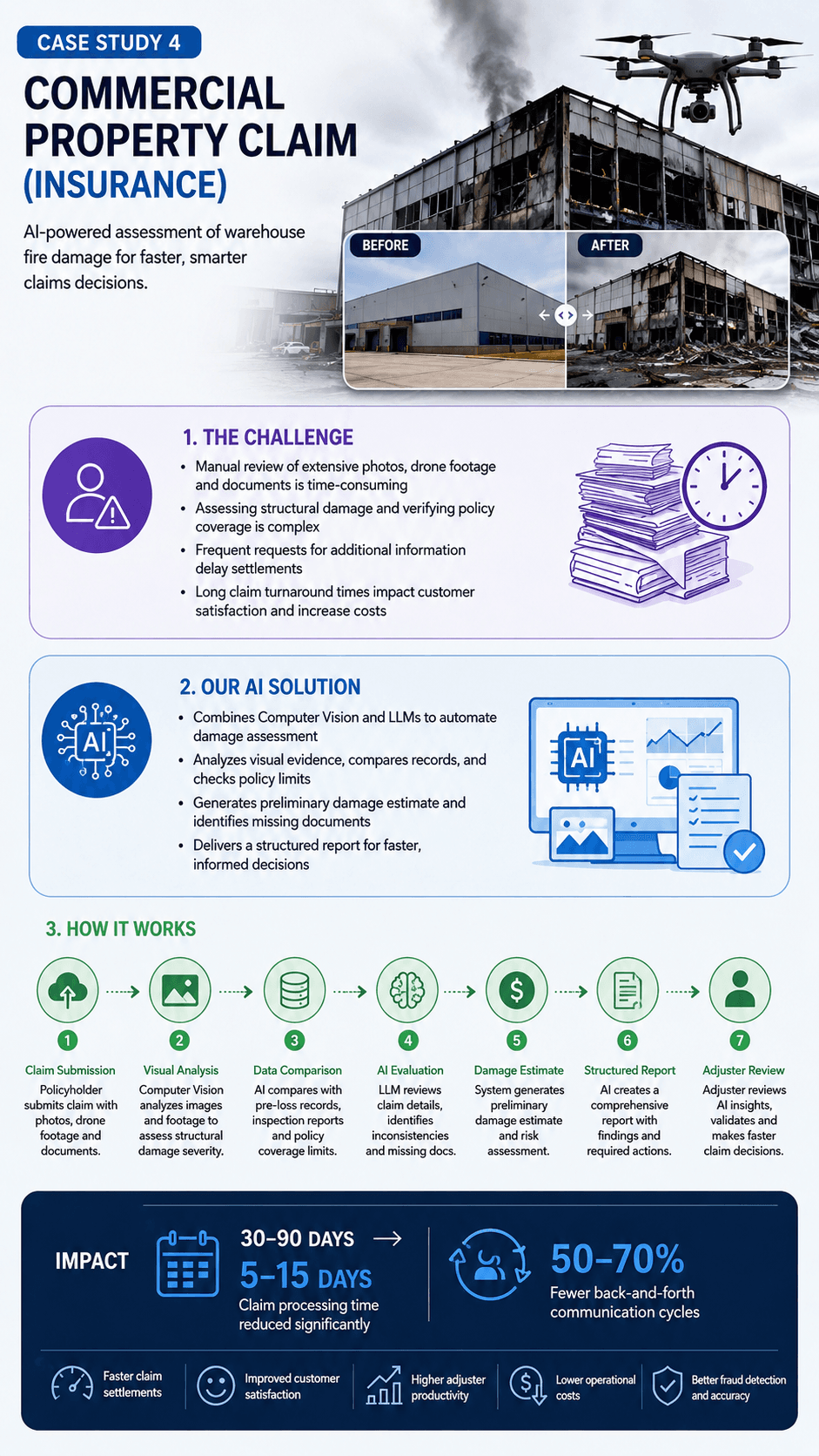
Commercial property insurance claims involving warehouse fires are often complex, requiring extensive manual review of damage photos, inspection reports, policy documents, and historical property records. Claims adjusters must assess structural damage, verify policy coverage limits, estimate losses, and identify missing documentation. This process can take weeks or months, leading to delays, repeated information requests, and increased operational costs for insurers and policyholders.

Our AI solution

Our AI-powered Claims Assessment Platform combines Computer Vision and Large Language Models (LLMs) to accelerate commercial property claim reviews. The system automatically analyzes fire damage images and drone footage, evaluates structural impact, cross-references policy coverage and historical property records, and generates preliminary damage estimates. It also identifies missing documentation and produces a structured report for claims adjusters, enabling faster and more accurate claim decisions.

How it works:
  • Policyholder submits warehouse fire claim along with photos, drone footage, and supporting documents.
  • Computer Vision models analyze visual evidence to assess structural damage severity and affected areas.
  • AI compares current damage against pre-loss property records, inspection reports, and policy coverage limits.
  • LLM reviews claim details, identifies inconsistencies, and determines any missing documentation required for processing.
  • The system generates a preliminary damage estimate and risk assessment.
  • A comprehensive, structured claims report is automatically created for the insurance adjuster.
  • Adjusters review AI-generated insights, validate findings, and make informed claim decisions faster.
How Agents Solve the Problem
Capability 06

How Agents Solve the Problem

The challenge

Our AI solution

How it works:
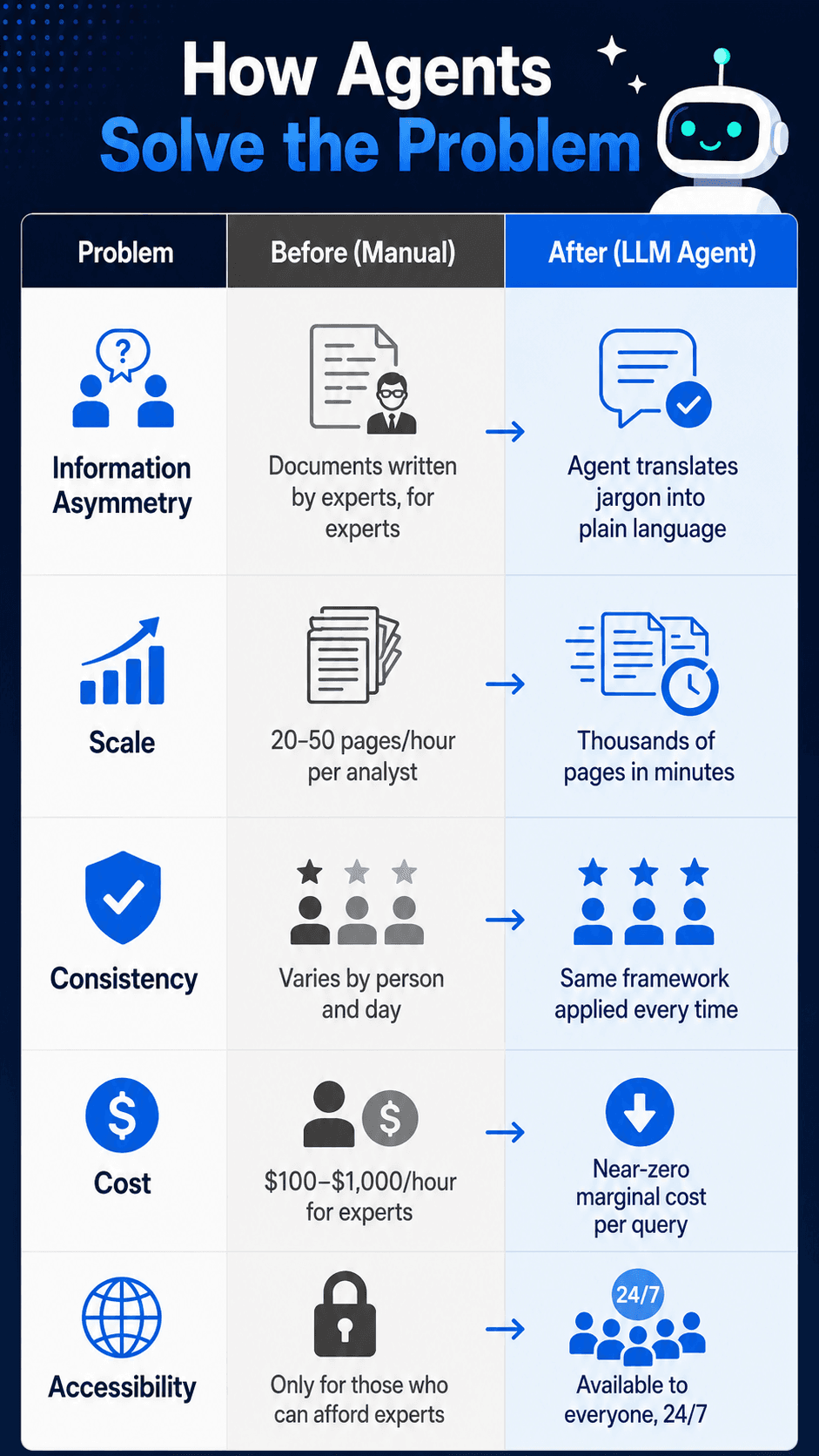
  • LLM agents don't replace experts — they amplify them. Agents handle the routine 80%; humans focus on the critical 20%.
  • One architecture, four industries. The same pipeline (Ingest → OCR → RAG → LLM → Output) adapts across Legal, Finance, Healthcare, and Insurance.
  • Speed: Contract review in 30 seconds. Due diligence in hours. Claim estimates in a day.
  • Responsible AI: RAG grounds responses in actual documents. Citations let users verify every claim. Human-in-the-loop for high-stakes decisions.
Synthetic Vision Data & Model Training
Capability 07

Synthetic Vision Data & Model Training

The challenge

Edge-AI products often suffer from limited or biased training data. Sourcing, labeling, and balancing real-world imagery is slow and expensive — and edge cases are hard to capture.

Our AI solution

We generate task-specific synthetic vision data with domain randomization, blend it with curated real samples, and run continual training loops to harden detectors for the long tail.

How it works:
  • Scalable, label-perfect training data
  • Targeted edge-case coverage
  • Faster model iteration cycles
  • Bias-aware evaluation
  • Reduced data collection cost
Retrieval-Augmented Assistants
Capability 08

Retrieval-Augmented Assistants

The challenge

Enterprise teams want LLM assistants that ground answers in proprietary knowledge — but stitching retrieval, evaluation, and access control into something production-grade is non-trivial.

Our AI solution

We design retrieval-augmented systems with hybrid search, reranking, document-level access control, and continuous evaluation — so assistants stay current, accurate, and auditable.

How it works:
  • Grounded answers with citations
  • Fine-grained access control
  • Continuous offline evaluation
  • Structured + unstructured retrieval
  • Streaming, low-latency UX
Falkome AI

Generative AI building blocks for the enterprise

Explore representative use cases — each one already battle-tested in real deployments.

Smart Route Optimization
01 / 07

Smart Route Optimization

AI analyzes real-time traffic, weather, and delivery constraints to determine the most efficient routes — reducing fuel costs, delivery time, and operational delays.

Ready to scope your rollout?

Let's tailor an AI plan for generative ai.

Share your goals, your sites, and your constraints. We'll come back with a phased blueprint and a measurable success plan.